
What do you want to Enquire about?
About Us
Agora Meditechnic is one of the leading project consultants for hospitals and nursing homes in the area of operation theatres, ICUs, IVF Centre and Isolated chambers.
Agora Meditechnic has carved a niche for itself in the clean room industry, helping some of the most prestigious customers achieve perfection in their clean environment related goals.
We are proud to be one of the few healthcare clean room companies in the world with a dedicated pool of highly qualified professionals from various facets of hospital clean room designing & planning.
Quality being our forte helps us to stand tall among our counterparts. At each stage of the planning, the products are rigorously tested on various parameters. We have engaged a team of highly experienced and qualified quality controllers that checks the raw materials as well as the final products to ensure their conformity to international quality standards. Following are some of factors on which our components are tested:
• Design
• Dimensional accuracy
• Performance
• Durability
• Resistance to corrosion
We have a separate R&D department, where our experts are engaged in conducting rigorous experiments on our existing portfolio of projects. By identifying the market requirements and prevailing market trends, our experts strive to develop new concepts and designs for the projects which has helped us to stay a step ahead of our competitors. Our R&D activities concentrate upon the improvement of the following:
• Raw material used
• Design
• Performance
The success we enjoy is the resultant of our hard work and client centric approach. Following are some of the factors that have enabled us to position ourselves as one of the prominent healthcare project consultants:
• Premium quality components
• Well developed infrastructure
• Timely delivery of consignments across the globe
• Customization facility
• Competitive prices
View more
Our Leadership Team

Mr. Alpesh Koladiya
Business Head
Products & Services
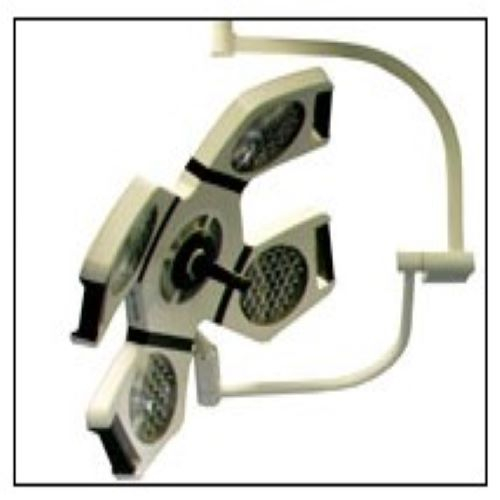
Operation theatre lamps
Product Detail
Operation theatre lamps
Innovative LEDs
• Low disturbance of air flow by flow optimised shape of the lamp body
• 2 x 160,000 luminance
• Good colour rendering properties
• Low heat transmission at use of light intensity
+ Show more
- Show less
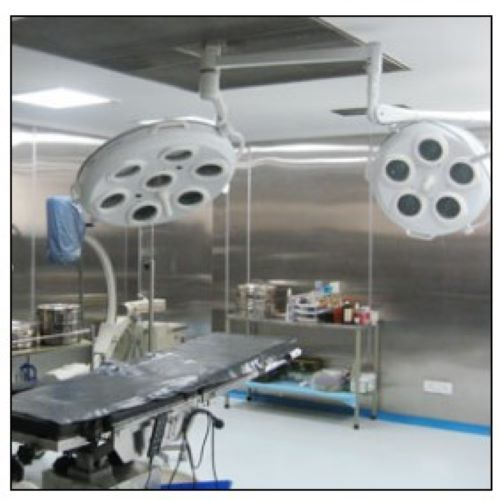

Surgical Operation Theatre
Product Detail
Surgical Operation Theatre
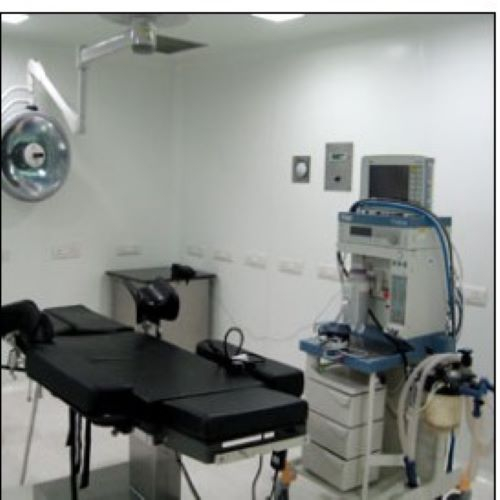
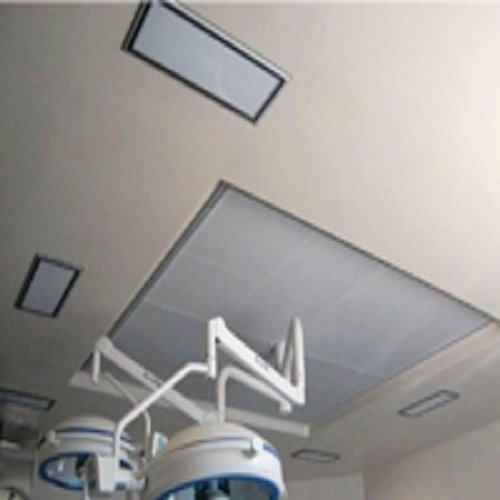
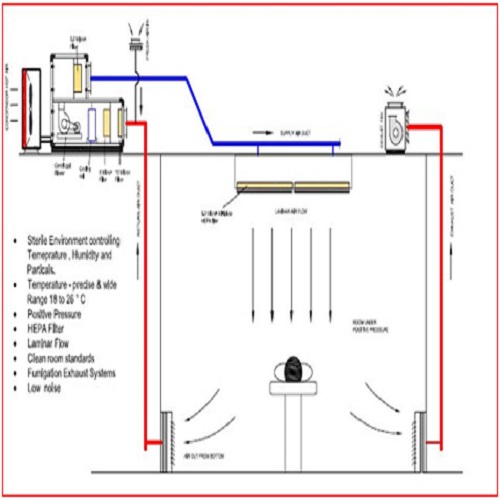
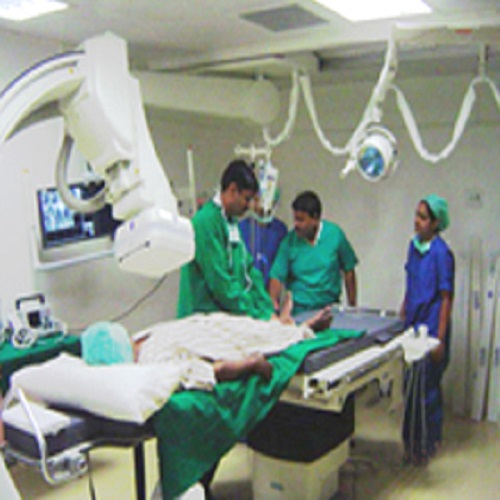
Agora meditechnic offers supply and installation of sterile environment systems and clean room infrastructure for operation theatre, with an aim to provide patients safety, infection control and increase surgeon’s confidence. The company is widely acclaimed for designing and installing projects as per the national and international Guidelines lines like.
• NABH
• DIN
• JCI
• GOST
• ASHRAE
As per research and surveys, it is proved that patients are highly prone to hospital related infections and below are some of the factors affecting occurrence of infection in operation theatre:
• Type of surgery
• Quality of air provided
• Rate of air exchange
• Number of persons present in Operation Theatre
• Level of compliance with infection control practices
• Quality of staff clothing and quality of cleaning process
+ Show more
- Show less
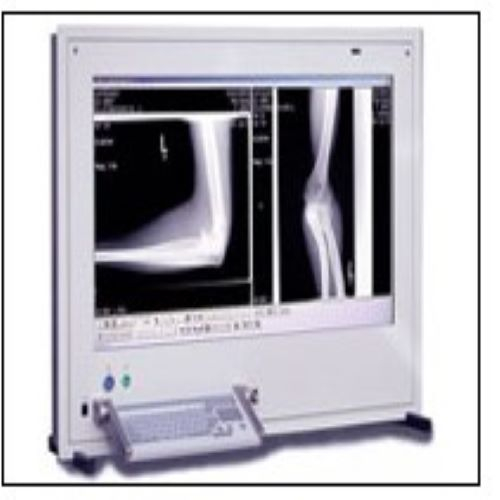
Xray Image Viewer
Product Detail
Xray Image Viewer
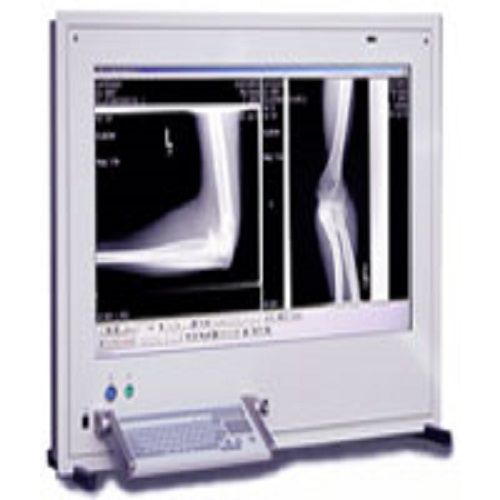
• Digital and analogue X-ray image viewers
• Ergonomically integrated into walls
• Keyboard and touch pad are anti-microbial
• Certification in accordance with the MPG (German medical product liability laws) and EC standards
+ Show more
- Show less
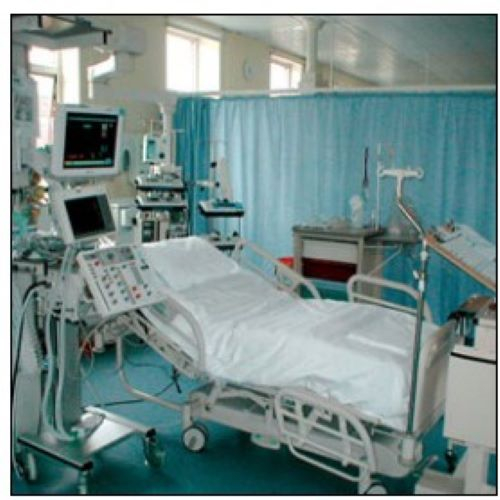
Intensive Care Unit Services (ICCU)
Product Detail
Intensive Care Unit Services (ICCU)
The intensive care unit is a room or series of room filled with patients attached to interventional technology team. Critical care unit is a specially designed and equipped facility staffed by skilled personnel to provide effective and safe care for dependent patients with a life threatening problem.
This interventional technology team consists of :
• Doctor
• Critical care nurses
• Therapists
• Nutritionists
• Chaplains and other support staff, builds an environment for healing or dying.
There are three types of ICUs:
• An open ICU: In this type, physicians admit, treat and discharge the patients
• An closed ICU: In this type, the admission, discharge and referral policies are under the control of intensivists.
• The hybrid model: In this type a combination of both the aspects of open and closed models by staffing the ICU with an attending physician and/or team to work in tandem with primary physicians.
ICUs can be classified as:
• Level I: This can be referred as high dependency where close monitoring, resuscitation, and short term ventilation i.e. in <24hrs has to be performed.
• Level II: This can be located in general hospital, undertake more prolonged ventilation, must have resident doctors, nurses, access to pathology, radiology, etc.
• Level III: This is located in a major tertiary care hospital, which is a referral hospital. It should provide all aspects of intensive care.
+ Show more
- Show less
IVF Lab Service
Product Detail
IVF Lab Service
Clinical embryology has put into practice in the laboratories for assisted reproduction techniques (ART) the recent discoveries regarding the physiology of early events in the development of human life. The embryologist is responsible for the correct and justified application of ART in these laboratories. Some of the guidelines which constitute the minimal requirements for any laboratory offering ART, with the aim of implementing a quality control system for all the embryologists of ESHRE. The strict application and further development of these guidelines will benefit all patients attending ART clinics.
The company offers pre-designed and engineered components with guaranteed performance and shorter assembly time. Below is the list of components offered by the company for IVF lab.
+ Show more
- Show less
Operation Theatre
Product Detail
Operation Theatre
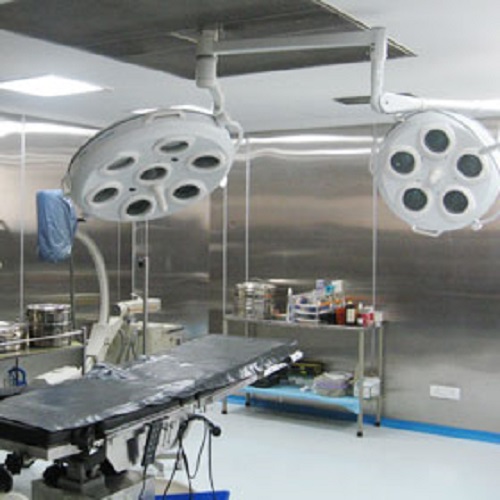
To avoid the above infections the company has listed down some of the basic protocols to control of infections in Operation Theatre.
• Separation of operation theatre from general traffic and air movement of hospital
• Zoning i.e. sequence of increasingly clean zones from the entrance to the operating area with the aim of reaching absolute asepsis at operating site.
• Easy movement of staff from one clean area to another without passing through unclean areas.
• Removal of unclean materials from the suite without passing thorough clean areas.
The company offers pre-designed and engineered components with guaranteed performance and shorter assembly time. Below is the list of components offered by the company for Operation Theatres.
+ Show more
- Show less
Walls and Ceilings Of Operating Theatre
Product Detail
Walls and Ceilings Of Operating Theatre
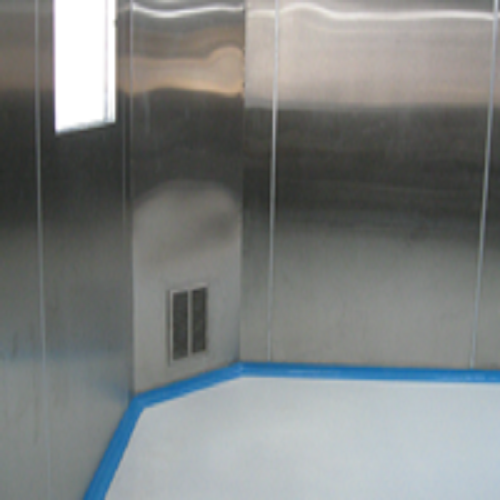
The interiors of operating theatres must withstand from heat and moisture in a hospital environment.
The requirements for wall finishes in an operating room are described below :
• The ability to withstand damage by mobile equipment
• To be impervious to moisture and unaffected by heat and steam
• To have a smooth matt finish, without crevices
• The colour should be of light rainbow hues
• To be totally unaffected by colour change, staining or mildew
• To be capable of modification for minor alterations
• Should not cause the build-up of a static electrical charge
• Should be joint less or have joints capable of being sealed
• An anticipated life of not less than ten years
+ Show more
- Show less
Flooring of operating theatre
Product Detail
Flooring of operating theatre
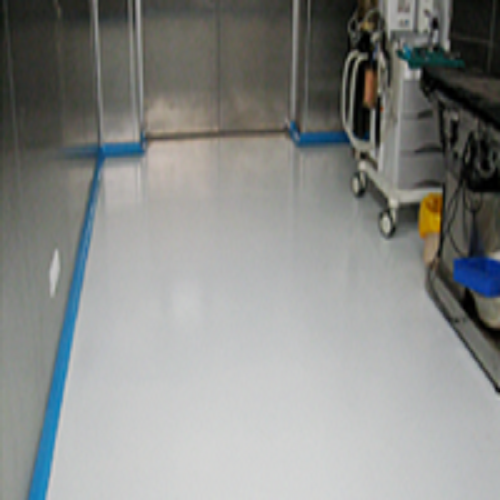
ESD-Control tile flooring helps to control involuntary personnel movement caused by electrostatic discharge, prevent hazardous static discharge directly to patient’s body and prevent fire or explosion when flammable anesthetics are used. ESD results in a danger of explosion caused by gases used for anesthesia in operation rooms.
In countries with modern medical technology, the explosive gases are no longer used. However, ESD protection is more challenging because some diagnostically/ therapeutically fields use more high-tech electronic medical equipment like electronic sensors, measuring instruments, actuators, microprocessor-controlled devices, etc. which requires ESD protection.
• Electrical and electrostatic characteristics
• Physical/ Mechanical properties
• Chemical resistance
• Clean room consideration - low carbon content / low out gassing
• Installation consideration
• Maintenance consideration
• Ease of performance for access floors
• Fire resistance
• Appearance
• Cost consideration
+ Show more
- Show less
Entry door for operating theatre
Product Detail
Entry door for operating theatre
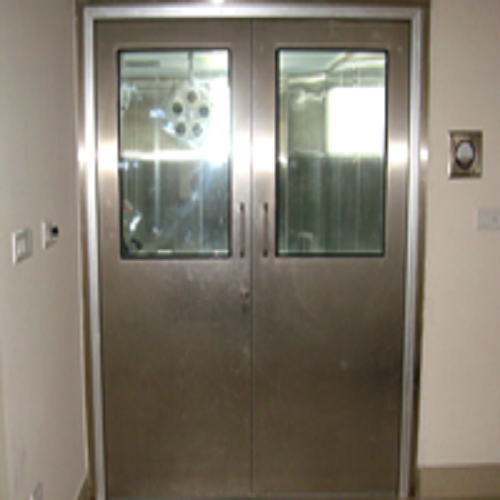
Electronically operated hermetically sealing sliding doors are provided to maintain sterility and accurate air pressure in the department.
• Contamination risks in the rooms are under control
• Disinfecting is quicker and safer
• Control the overpressure in the room
• Acoustic and noise control
• Creating a quite environment inside and outside the operating theater/clean room
of a failure of the air handling unit, the overpressure is under control Some of the other equipments used in operating theatre, which the company installs, are as below.
+ Show more
- Show less
Media Bridge
Product Detail
Media Bridge
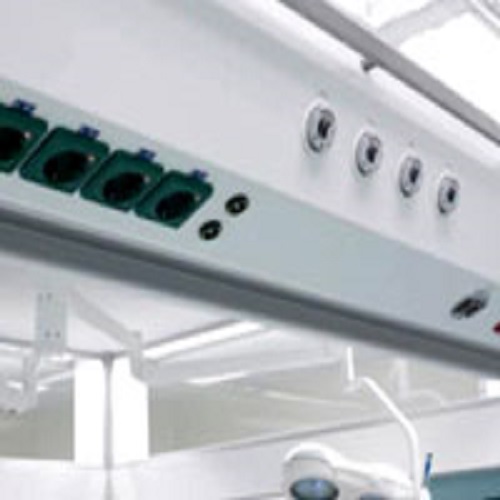
• Medical gas supplies
• Power supply
• Flow balancer up to height of door
• No connection of clean air area to the surroundings
• Visual separation
+ Show more
- Show less
Surgeon’s panels
Product Detail
Surgeon’s panels
• Remote control panels individual control of:
¤ Air conditioning system
¤ Surrounding lighting system
¤ Operating theatre lamps
¤ Operating table
• Monitoring of the medical gas supply and the IT network
+ Show more
- Show less
Advantages of Modular Operation Theatre
Product Detail
Advantages of Modular Operation Theatre
For Surgeons:
¤ Absolutely sterile environment
¤ Increase in success rate of surgeries
¤ Post-Operative infection rate can be reduced by 65%
¤ Less Post-Operative recovery time
¤ Due to Laminar flow, surgeon do not inhale the anesthetic gasses
¤ Temperature and Humidity can be adjusted to suit specialized surgeries (eg. Bronchology)
¤ Safety for medical staff from electrical equipment failure due to conductive flooring
¤ Touch free entry/exit after scrubbing
¤ Hands free telephone for mid-surgery consultation
• For Hospital Administration:
¤ Preference for surgeons to work in a better environment; laminar flow, sterile, better illumination
¤ Easy to clean and easy to maintain Operation Theatres
¤ Electrical faults can be rectified from outside, so entry of technicians can be restricted to some extent
• For Patients:
¤ Less Post-Operative recovery time
¤ Safety for medical staff from Electrical equipment failure due to conductive flooring
+ Show more
- Show less
Design aspects of an Intensive Care Unit
Product Detail
Design aspects of an Intensive Care Unit
Floor plan and design should be based on:
• Patient admission pattern
• Staff & visitor traffic patterns
• Need for support facilities such a nursing station, storage, clerical space, administrative & educational requirements.
• Eight to twelve beds per unit is considered best from a functional perspective.
• Each healthcare facility should consider the need for positive and negative pressure isolation rooms within the ICU.
• This need will depend mainly upon patient population and State Department of Public Health requirements.
• Each intensive care unit should be a geographically distinct area within the hospital, with controlled access.
• Location should be chosen so that the unit is adjacent to, or within direct elevator travel to and from, the emergency department, operating room, intermediate care units, and radiology department
• The preferred design is to allow a direct line of vision between the patient and the central nursing station.
• In ICUs with a modular design, patients should be visible from their respective nursing substations.
• Sliding glass doors and partitions facilitate this arrangement, and increase access to the room in emergency situations.
• Signals from patient call systems, alarms from monitoring equipment, and telephones add to the sensory overload in critical care units.
+ Show more
- Show less
Central Station
Product Detail
Central Station
• A central nursing station should provide a comfortable area of sufficient size to accommodate all necessary staff functions.
• When an ICU is of a modular design, each nursing substation should be capable of providing most, if not all functions of a central station.
• There must be adequate overhead and task lighting, and a wall mounted clock should be present.
• Adequate space for computer terminals and printers is essential when automated systems are in use. • Patient records should be readily accessible.
• Adequate surface space and seating for medical record charting by both physicians and nurses should be provided.
• Shelving, file cabinets and other storage for medical record forms must be located so that they are readily accessible by all personnel requiring their use.
+ Show more
- Show less
X-RAY viewing area
Product Detail
X-RAY viewing area
• A separate room or distinct area near each ICU or ICU cluster should be designated for the viewing and storage of patient radiographs.
• An illuminated viewing box or carousel of appropriate size should be present to allow for the simultaneous viewing of serial radiographs.
+ Show more
- Show less
Work areas and storage
Product Detail
Work areas and storage
• Work areas and storage for critical supplies should be located within or immediately adjacent to each ICU.
• There should be a separate medication area of at least 50 square feet containing a refrigerator for pharmaceuticals, a double locking safe for controlled substances, and a sink with hot and cold running water.
• Countertops must be provided for medication preparation, and cabinets should be available for the storage of medications and supplies.
+ Show more
- Show less
Receptionist area
Product Detail
Receptionist area
• Each ICU or ICU cluster should have a receptionist area to control visitor access.
• Ideally, it should be located so that all visitors must pass by this area before entering.
• The receptionist should be linked with the ICU(s) by telephone and/or other intercommunication system.
• It is desirable to have a visitors' entrance separate from that used by healthcare professionals. This entrance should be securable if the need arises.
+ Show more
- Show less
Special Procedures Room
Product Detail
Special Procedures Room
• If a special procedures room is desired, it should be located within, or immediately adjacent to, the ICU.
• One special procedures room may serve several ICUs in close proximity.
• Consideration should be given to ease of access for patients transported from areas outside the ICU.
• Room size should be sufficient to accommodate necessary equipment and personnel.
• Monitoring capabilities, equipment, support services, and safety considerations must be consistent with those provided in the ICU proper.
• Work surfaces and storage areas must be adequate enough to maintain all necessary supplies and permit the performance of all desired procedures without the need for healthcare personnel to leave the room
+ Show more
- Show less
Clean and Dirty Utility Rooms
Product Detail
Clean and Dirty Utility Rooms
• Clean and dirty utility rooms must be separate rooms that lack interconnection.
• They must be adequately temperature controlled, and the air supply from the dirty utility room must be exhausted.
• Floors should be covered with materials without seams to facilitate cleaning.
• The clean utility room should be used for the storage of all clean and sterile supplies, and may also be used for the storage of clean linen.
• Shelving and cabinets for storage must be located high enough off the floor to allow easy access to the floor underneath for cleaning.
• The dirty utility room must contain a clinical sink and a hopper both with hot and cold mixing faucets.
• Separate covered containers must be provided for soiled linen and waste materials.
• There should be designated mechanisms for the disposal of items contaminated by body substances and fluids.
• Special containers should be provided for the disposal of needles and other sharp objects.
+ Show more
- Show less
Equipment storage
Product Detail
Equipment storage
• An area must be provided for the storage and securing of large patient care equipment items not in active use.
• Space should be adequate enough to provide easy access, easy location of desired equipment, and easy retrieval.
• Grounded electrical outlets should be provided within the storage area in sufficient numbers to permit recharging of battery operated items.
+ Show more
- Show less
Nourishment preparation area
Product Detail
Nourishment preparation area
• A patient nourishment preparation area should be identified and equipped with food preparation surfaces, an ice-making machine, a sink with hot and cold running water, a countertop stove and/or microwave oven, and a refrigerator.
• The refrigerator should not be used for the storage of laboratory specimens.
• A hand washing facility should be located in or near the area.
+ Show more
- Show less
Staff Lounge
Product Detail
Staff Lounge
• A staff lounge must be available near each ICU or ICU cluster to provide a private, comfortable, and relaxing environment.
• Secured locker facilities, showers and toilets should be present.
• The area should include comfortable seating and adequate nourishment storage and preparation facilities, including a refrigerator, microwave oven, etc.
• The lounge must be linked to the ICU by telephone or intercommunication system, and emergency cardiac arrest alarms should be audible within.
+ Show more
- Show less
Visitors' lounge / waiting room
Product Detail
Visitors' lounge / waiting room
• A visitors' lounge or waiting area should be provided near each ICU or ICU cluster.
• Visitor access should be controlled from the receptionist area. One and one-half to two seats per critical care bed are recommended.
• Public telephones (preferably with privacy enclosures) and dining facilities must be available to visitors.
• Television and/or music should be provided.
• Public toilet facilities and a drinking fountain should be located within the lounge area or immediately adjacent.
• Warm colors, carpeting, indirect soft lighting, and windows are desirable.
• A variety of seating, including upright, lounge, and reclining chairs, is also desirable.
• Educational materials and lists of hospital and community-based support and resource services should be displayed.
• A separate family consultation room is strongly recommended.
+ Show more
- Show less
Patient transportation routes
Product Detail
Patient transportation routes
• Patients transported to and from an ICU should be transported through corridors separate from those used by the visiting public.
• Patient privacy should be preserved and patient transportation should be rapid and unobstructed.
• When elevator transport is required, an oversized keyed elevator, separate from public access, should be provided.
+ Show more
- Show less
Supply and Service Corridors
Product Detail
Supply and Service Corridors
• A perimeter corridor with easy entrance and exit should be provided for supplying and servicing each ICU.
• Removal of soiled items and waste should also be accomplished through this corridor.
• This helps to minimize any disruption of patient care activities and minimizes unnecessary noise.
• The corridor should be at least eight feet in width.
• Doorways, openings, and passages into each ICU must be a minimum of 36 inches in width to allow easy and unobstructed movement of equipment and supplies.
• Floor coverings should be chosen to withstand heavy use and allow heavy wheeled equipment to be moved without difficulty.
+ Show more
- Show less
Patient modules
Product Detail
Patient modules
• Ward-type ICUs should allow at least 225 square feet of clear floor area per bed.
• ICUs with individual patient modules should allow at least 250 square feet per room (assuming one patient per room),
• Provide a minimum width of 15 feet, excluding ancillary spaces (anteroom, toilet, storage).
• Isolation rooms should each contain at least 250 square feet of floor space plus an anteroom.
• Each anteroom should contain at least 20 square feet to accommodate hand-washing, gowning, and storage.
• If a toilet is provided, it must be private.
• A cardiac arrest/emergency alarm button must be present at every bedside within the ICU. The alarm should automatically sound in the hospital telecommunications center, central nursing station, ICU conference room, staff lounge, and any on-call rooms. The origin of these alarms must be discernable.
• Space and surfaces for computer terminals and patient charting should be incorporated into the design of each patient module as indicated.
• Storage must be provided for each patient's personal belongings, patient care supplies, linen and toiletries. Locking drawers and cabinets must be used if syringes and pharmaceuticals are stored at the bedside.
• Personal valuables should not be kept in the ICU. Rather, these should be held by Hospital Security until patient discharge.
+ Show more
- Show less
Improving sensory orientation
Product Detail
Improving sensory orientation
Additional approaches to improving sensory orientation for patients may include:
• The provision of a clock, calendar, bulletin board, pillow speaker connected to radio and television.
• Televisions must be out of reach of patients and operated by remote control.
• If possible, telephone service should be provided in each room.
• Comfort considerations should include methods for establishing privacy for the patient. Shades, blinds, curtains, and doors should control the patient's contact with his/her surroundings.
• A supply of portable or folding chairs should be available to allow for family visits at the bedside. An additional comfort consideration is the choice of color scheme for the room, which should promote rest and have a calming effect.
+ Show more
- Show less
Utilities
Product Detail
Utilities
Each intensive care unit must have:
• Electrical power,
• Water, oxygen,
• Compressed air,
• Vacuum, lighting,
• And environmental control systems that support the needs of the patients and critical care team under normal and emergency situations, and these must meet or exceed regulatory and accreditation agency codes and standards.
+ Show more
- Show less
Electric supply
Product Detail
Electric supply
• Grounded 110 volt electrical outlets with 30 amp circuit breakers should be located within a few feet of each patient's bed.
• Sixteen outlets per bed are desirable.
• Outlets at the head of the bed should be placed approximately 36 inches above the floor to facilitate connection,
• To discourage disconnection by pulling the power cord rather than the plug.
• Outlets at the sides and foot of the bed should be placed close to the floor to avoid tripping over electrical cords.
+ Show more
- Show less
Water supply
Product Detail
Water supply
• The water supply must be from a certified source, especially if hemodialysis is to be performed.
• Zone stop valves must be installed on pipes entering each ICU to allow service to be turned off should line breaks occur.
• Hand-washing sinks deep and wide enough to prevent splashing, preferably equipped with elbow, knee, foot, or sonar-operated faucets, must be available near the entrances to patient modules, or between every two patients in ward-type units.
+ Show more
- Show less
Lightning
Product Detail
Lightning
• Total luminance should not exceed 30 foot-candles.
• It is preferable to place lighting controls on variable-control dimmers located just outside of the room.
• Night lighting should not exceed 6.5 fc for continuous use or 19 fc for short periods.
• Separate lighting for emergencies and procedures should be located in the ceiling directly above the patient and should fully illuminate the patient with at least 150 fc shadow-free
• A patient reading light is desirable, and should be mounted
+ Show more
- Show less
Environmental control systems
Product Detail
Environmental control systems
• A minimum of six total air changes per room per hour are required, with two air changes per hour composed of outside air.
• For rooms having toilets, the required toilet exhaust of 75 cubic feet per minute should be composed of outside air.
• Central air-conditioning systems and re-circulated air must pass through appropriate filters.
• Air-conditioning and heating should be provided with an emphasis on patient comfort.
• For critical care units having enclosed patient modules, the temperature should be adjustable within each module.
+ Show more
- Show less
Computerized Charting
Product Detail
Computerized Charting
• These systems provide for "paperless" data management, order entry, and nurse and physician charting. If and when a decision is made to utilize this technology, it is important to integrate such a system fully with all ICU activities.
• Bedside terminals facilitate patient management by permitting nurses and physicians to remain at the bedside during the charting process.
+ Show more
- Show less
Other Facilities
Product Detail
Other Facilities
• Voice Intercommunication Systems
• Satellite Laboratory
• Physician On-Call Rooms
• Administrative Offices
+ Show more
- Show less
Laboratory design
Product Detail
Laboratory design
The embryology laboratory should have adequate space to follow good laboratory practice.
• The construction of the laboratory should ensure aseptic and optimal handling of gametes and
pre-embryos during all phases of the treatment.
• The location of storage areas and equipment such as incubators, centrifuges and cryo equipment should be logically planned for efficiency and safety within each working area.
• Separate office space should be provided for administrative work, such as record keeping and data entry.
• A general wet area in which washing of equipment, sterilization, etc., is performed, should be separate from the embryo laboratory. Moreover, if fixatives are applied, these analyses should be performed in a separate room in a fume-hood.
• When commissioning the laboratory, thought should be given to the most recent developments in equipment and facilities. Bench height, adjustable chairs, microscope eye height, efficient use of space and surfaces, sufficient air-condition and the amount of daylight, all contribute to a working environment that minimizes distraction and fatigue. Consideration should also be given to local health and safety requirements.
+ Show more
- Show less
Laboratory equipment
Product Detail
Laboratory equipment
• The laboratory equipment used should be adequate for laboratory work and easy to clean and disinfect.
• Critical items of equipment, including incubators and frozen embryo storage facilities, should be appropriately alarmed and monitored.
• All embryo laboratories should have an automatic emergency generator backup in the event of power failure.
• A minimum number of two incubators is recommended. Gas cylinders should be placed outside or in a separate room with an automatic backup system.
• Incubators should be frequently cleaned and sterilized. Nitrogen tanks should be cleaned and sanitized at least every year.
+ Show more
- Show less
Infectious agents
Product Detail
Infectious agents
All assisted reproductive technologies involve handling biological material, and pose a potential hazard of transmitting diseases to personnel. Sources of infection in this system are compounds and follicle fluid of animal origin. Therefore,
- Vaccination of the personnel against hepatitis B or other available viral disease is recommended.
- Screening patients and gamete donors for HIV, hepatitis B/C and other sexually transmitted diseases before treatment or gamete cryopreservation should be routinely adopted.
- Although patients' admittance to IVF treatment cycles is regulated by physicians, the laboratory staff must be informed about the risks of handling potentially infected biological material. The following recommendations should be considered.
- If one or both partners are HIV-positive, IVF and embryo transfer should not be attempted, unless local rules give authorization after extensive examination. Donor semen is advised for a seronegative woman if her partner is seropositive, as HIV-1 viral particles may be present in the cytoplasmic compartment of motile spermatozoa. Therefore, the possibility exists that viral particles enter the oocyte during fertilization either with conventional IVF or intracytoplasmic sperm injection (ICSI). The fate of these particles in the resulting embryo is unknown.
- If the male partner is infected by the virus of hepatitis B, the seronegative woman must be vaccinated before IVF.
+ Show more
- Show less
Protective measures
Product Detail
Protective measures
The purpose of the protective measures is also to ensure aseptic conditions for gamete and embryos.
The procedures should deal with, but not be limited to, the following:
• Use of laboratory clothing.
• Use of non-toxic (non-powdered) gloves and masks.
• Use of eye and face protection if cryogenic materials are handled.
• Use of vertical laminar-flow benches.
• Use of mechanical pipetting devices.
• Use of mechanical pipetting devices.
• Disinfection and sterilization of potentially infected equipment.
• Use of disposable material; after usage, it must be discarded immediately in the proper waste containers. Potential infectious materials must be disposed of in a manner that protects laboratory workers and maintenance, service, and housekeeping staff from exposure to infectious materials in the course of their work.
• Needles and other sharps should be handled with extreme caution and discarded in special containers.
Cross-contamination with infectious material from one patient to another could still occur during the cryopreservation procedure when straws with semen or embryos are filled by dipping the straw in patient medium with semen or embryos, sealing it and passing it into liquid nitrogen without external disinfection.
+ Show more
- Show less
Isolated Chambers Service
Product Detail
Isolated Chambers Service
+ Show more
- Show less
NICU
Product Detail
NICU
+ Show more
- Show less
Injectibles Production Service
Product Detail
Injectibles Production Service
+ Show more
- Show less
Tablets Service
Product Detail
Tablets Service
+ Show more
- Show less
Modular Operation Theatre
Product Detail
Modular Operation Theatre
A. The air conditioning requirements for Operation Theater in an HCO have been deliberated at length with manufacturers, engineers, technical cornmittee members and other stake holders and the following guidelines have been finalised.
B. For this purpose operation theaters have been divided into two distinct groups:
i. Superspeciality OT: Superspeciality OT means operations of Neurosciences, Orthopedics (Joint Replacement), Cardiothoracic and Transplant Surgery (Renal, Liver etc).
ii. General OT: This includes Ophthalmology and all other basic surgical disciplines. District hospital OTs and FRU OT would fall under this category.
C. The following basic assumptions have been kept in view:
• OT Size: Standard OT size of 20' x 20' x 10' (Ht. below the false ceiling level is considered).
• Occupancy: Standard occupancy of 5-8 persons at any given point of time inside the OT is considered.
• Equipment Load: Standard equipment load of 5-7 kW considered per OT.
• Ambient temperature & humidity at each location to be considered while designing the system.
+ Show more
- Show less
View more